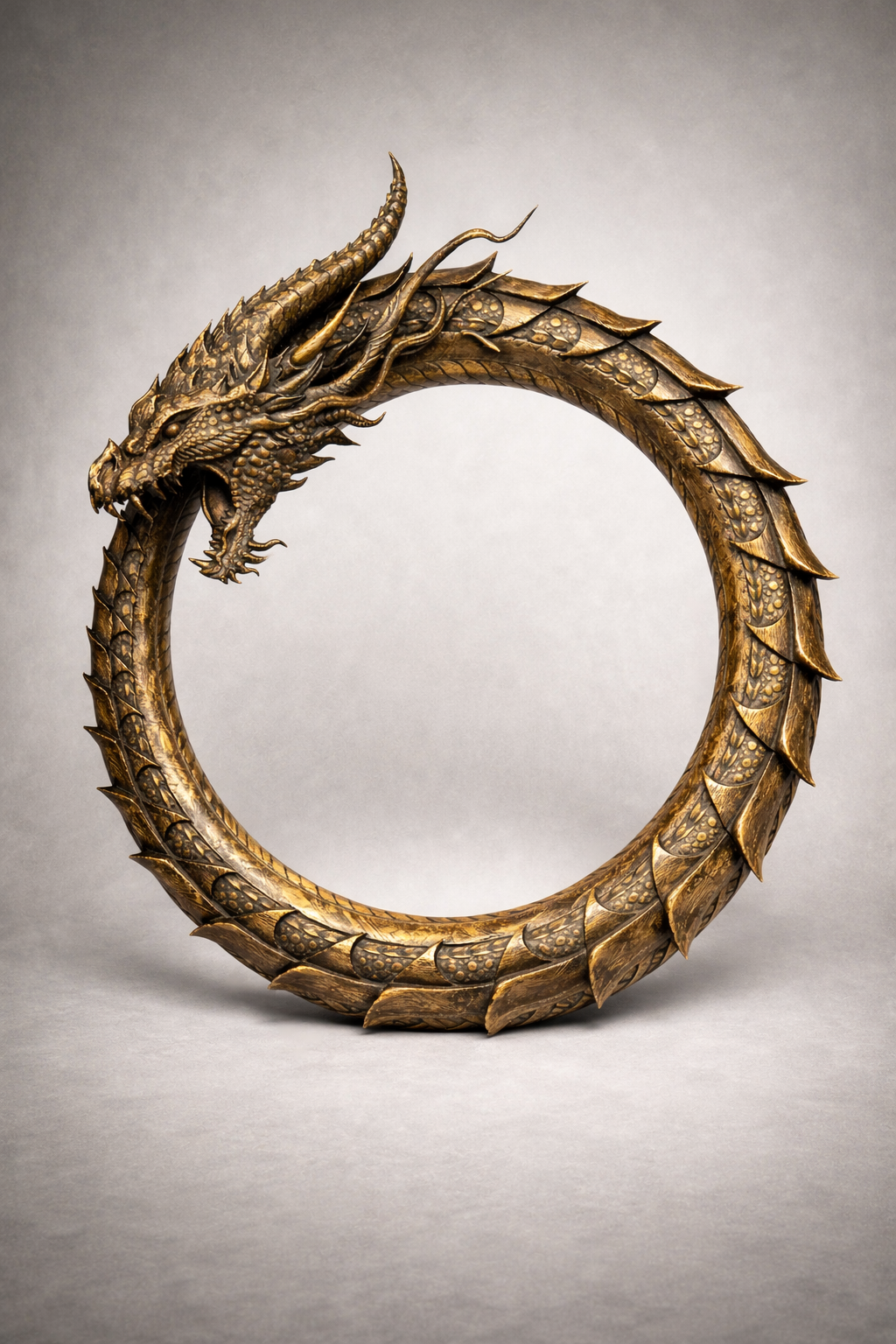
In 1456, Vlad III reclaimed the Wallachian throne with the cold efficiency of a man returning to unfinished business. His methods were not the brutality of rage — they were the brutality of precision: each act calculated, each death positioned where it would do the most work. When his labourers unearthed a bronze pendant at the ruins of Poenari — a dragon eating its own tail — an intelligence that had carried hosts for ten thousand years opened into his mind and found something it had never encountered before. Not a man broken into cruelty. Not a man consumed by grief or vengeance. A man already complete: an appetite that was structural, native, requiring nothing from the outside to sustain it. The suit had always amplified what it found. This was the first time it had nothing to add.
What the suit provided was capability. What Vlad did with it was the most precisely calculated campaign of terror in medieval memory: the wells poisoned, the grain burned, the land stripped bare ahead of sixty thousand Ottoman soldiers. Twelve thousand, nine hundred and twenty-three bodies on a south-facing hillside, arranged specifically for Mehmed II’s eyes at the point in his march when his army was most depleted — historians would record twenty thousand, and both numbers are accurate in their way. A night raid on the Ottoman command tent that left seventeen bodies in a perfect line and no explanation. Amber eyes at the visor of armour that moved in silence and returned at dawn, and the corridor that emptied itself of servants because some things, once witnessed, could not be stood to be witnessed again. The survivors’ accounts assembled toward something no category could contain: a creature of the night, a thing that drank blood, a presence that walls and faith and the ordinary logic of enemies could not hold.
The suit demanded a price: more food, significantly more, replenishing the reserves each operation consumed. Vlad refused. He ate his measured meal and set his fork down at the correct moment, and he would not be governed by what he wore. This refusal — made once, early, filed as settled — was the decision that killed him. Not a stake through the heart. Not sunlight. Not the armies that eventually brought him down. A man’s absolute refusal to acknowledge a debt to anything, maintained with perfect consistency until nothing remained. The Dragon tells the story the myth got right: a man who moved in darkness, left bodies without blood, and could not be contained by walls or faith or the ordinary categories men applied to enemies. The horror was not that something supernatural found him. The horror was that nothing supernatural was required.